Design and Construction of an Automatic Irrigation System for a Large-Scale Eco-Urban Area
TG1
Designing and building an automatic irrigation system for a large-scale eco-urban area of 1.83 million m² demands sophisticated hydraulic engineering. Applying the IRRICAD simulation model, a variable-frequency pump station, a tiered water supply pipe network and 2-wire (decoder) control for more than 200 solenoid valves ensures stable, uniform operation while keeping investment costs optimized.
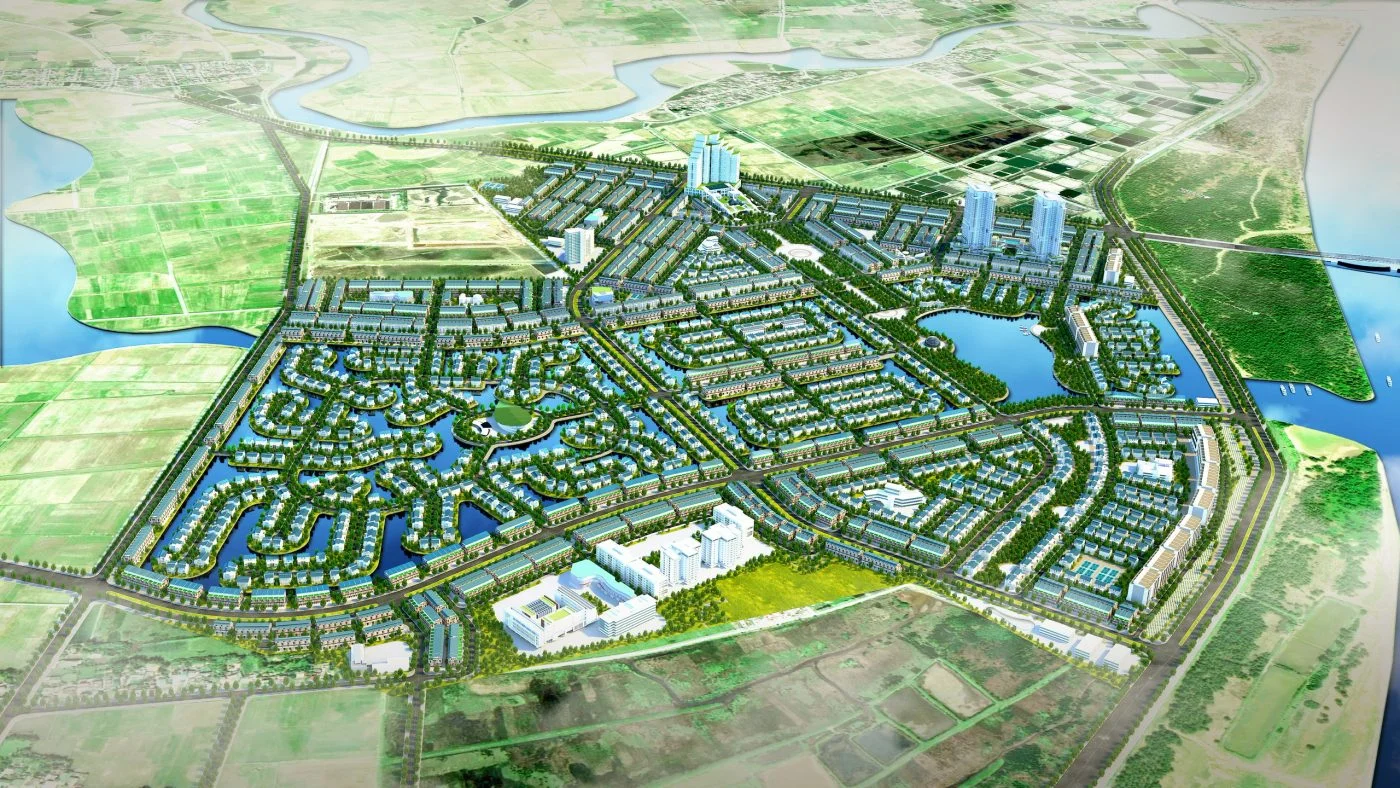
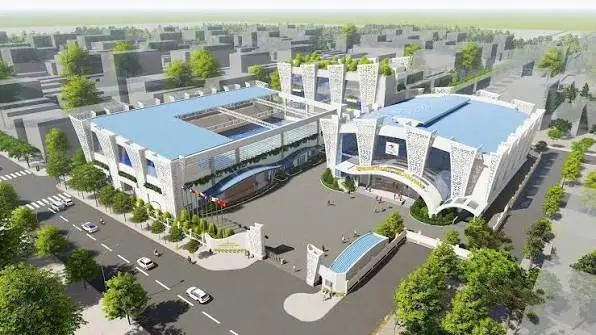
Overall perspective of the Ecopark Nghe An project
Project overview: landscape irrigation for an eco-urban area
The project is located in an eco-urban area with a total scale of approximately 1,830,000 m², master-planned together with low-rise housing, villas, townhouses, apartments, schools, commercial areas, plazas, parks and a landscape system spread across the entire site.
A key feature of the master plan is the very large proportion of green space. About 575,000 m² is dedicated to greenery and water surfaces, equivalent to nearly 30% of the total area. A single central lake park alone covers roughly 100,000 m², forming a large landscape core connected to the roads, internal gardens and the surrounding residential areas. The whole area is planned for approximately 3,147 housing units, including townhouses, villas and apartments.
The landscape is therefore not concentrated in a single park but distributed in many layers: large parks, internal gardens, lawns, shrubs, shade trees, medians, planted sidewalks, traffic islands, internal roads and green strips between rows of houses. This is precisely what makes the irrigation problem complex.
It is not possible to use a single type of sprinkler, a single pipe diameter, or to irrigate the whole area at the same time. Each landscape patch has a different shape, plant type, water demand, distance to the pump station and elevation.
Scope of the irrigation system delivered by NTS Engineering
Within the overall urban area described above, the scope of irrigation design and construction focuses on a large low-rise subdivision, with about 263 townhouses and villas, together with the entire landscape associated with the roads, sidewalks, medians and parks within the subdivision.
According to the project documents, the scope of work includes an automatic irrigation system for sidewalks, medians, parks and landscape areas, as well as the electrical power supply, pump control, solenoid valve control and auxiliary equipment needed to complete the entire system.
Because the landscape is distributed along the urban road network, the irrigation system is not a small network concentrated around the pump station but extends across many roads and hundreds of independent irrigation zones.
The overall drawing shows the irrigation water supply network running through many residential areas and green patches, with DN160 and DN110 main lines and a great many DN90 branches supplying the valve clusters throughout the site.
To make this system operate reliably, we chose to calculate the entire network with the specialized software IRRICAD, and only then decided on pipe diameters, groups of valves operating simultaneously, pump parameters and the irrigation schedule.
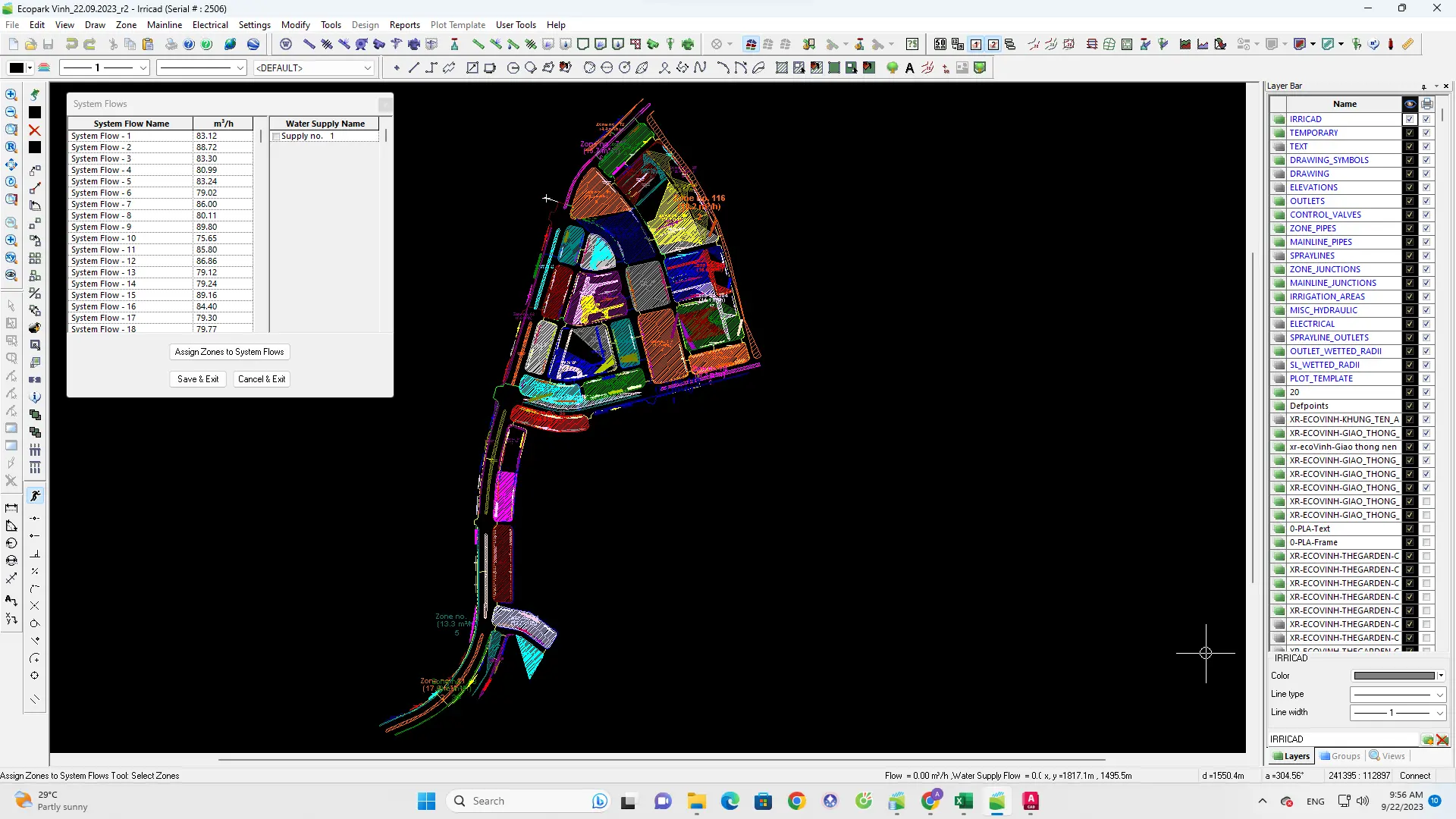
Diagram of simultaneous irrigation showing zone names, flow rates and irrigation sequence
Sprinkler design from the landscape drawings
The first task is not choosing the pump or the pipe diameter but processing the landscape drawings. From the landscape layout, each area is analyzed in detail according to:
Plant type and the shape of the green patch
Width of planting strips and spacing between green patches
Location of paths, paved surfaces and existing elevations
Location of large trees and the requirement to limit water spraying onto roads
Suitable radius, spray angle and flow rate of each type of sprinkler head
The sprinkler heads are then laid out directly on the plan. The key principle is that water must cover the area to be irrigated evenly while keeping overspray onto traffic roads, paved surfaces and structures to a minimum.
In an urban project, the sprinkler layout alone differs considerably between a wide lawn, a planting strip 1–2 m wide, a traffic island, a front garden and a free-form park. Once the sprinkler layout is complete, each group of sprinkler heads is assembled into an independent irrigation zone, each zone controlled by one solenoid valve. This is the input data for starting the hydraulic calculation.
Hydraulic calculation of the entire system with IRRICAD
For a system with more than 200 valves, hydraulic calculation with simple spreadsheets can hardly reflect the full operating state of the network. The entire system was therefore rebuilt in IRRICAD.
In the software, NTS engineers declare in detail: the water source, pump station location, main and branch pipe routes, elevations, solenoid valves, each irrigation zone, the type and flow rate of sprinkler heads, required pressure, and pipe material and diameter. IRRICAD simulates the entire network and returns the flow rate, velocity and pressure loss, as well as the actual pressure at each point.
In the project’s Mainline Design Report, every pipe section was checked for diameter, flow rate, velocity, length and head loss. Some operating states of the network have a total flow rate above 80 m³/h, showing that this is already an irrigation water supply system at the scale of technical infrastructure.
Engineer’s perspective: IRRICAD is not used only to select pipe diameters; it also solves the problem of grouping zones that operate simultaneously (System Flow). Instead of running each valve in sequence, which prolongs the irrigation time, the software helps arrange valve groups to run in parallel while still ensuring pressure at the last valve on the line and not exceeding the capacity of the pump station.
Optimizing the DN160 – DN110 – DN90 main pipe network
After simulation and optimization with IRRICAD, the pipe network is organized in a clear, tiered structure:
TIERED IRRIGATION WATER SUPPLY NETWORK
Pump station → HDPE DN160 → HDPE DN110 → HDPE DN90 → 2" solenoid valve → Zone branch pipe (DN63–DN25) → Sprinkler

Main line parameters:
- Line from the pump station: HDPE DN160
- Main line along the road: HDPE DN110
- Branch line to the valve cluster: HDPE DN90
This option is the result of the simulation calculations. The initial design documents had options using smaller sizes, but after hydraulic simulation, the line from the pump was upgraded to DN160 and the DN110 – DN90 system was re-optimized. From the solenoid valve, the zone pipes step down from DN63 to DN25 depending on the actual flow rate; the final sections connecting to the sprinklers use smaller PE pipe.
Pipes that are too small increase velocity and pressure loss; conversely, choosing oversized pipes throughout significantly increases investment cost. IRRICAD helps find the optimal balance between hydraulics and economics.
Pump station solution and variable-frequency control system
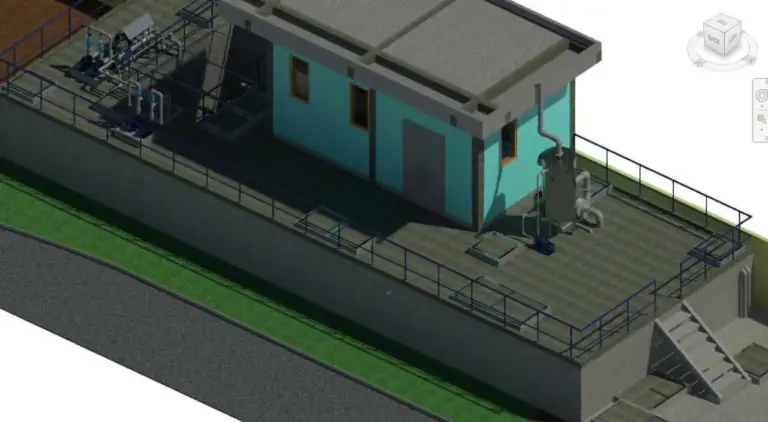
The water supply source for the system is designed with 2 irrigation supply pumps operating in rotation. The system maintains network pressure at the set value and at the same time receives protection signals from the low-level float switch in the water tank.
According to the design, the selected pump is a horizontal-shaft centrifugal pump of about 22 kW, with an operating range of Q = 36–138 m³/h and H = 65.5–42.5 m. The wide flow range allows the pump station to respond flexibly, from just a few zones to many valves operating simultaneously.
Item
Technical specification / Solution
Operating role
Water supply pumps
2 x horizontal-shaft centrifugal pumps, 22 kW (alternating operation)
Ensure a flow range of Q = 36–138 m³/h, H = 65.5–42.5 m
Inverter & pressure sensor
Controls motor speed according to actual pipeline pressure
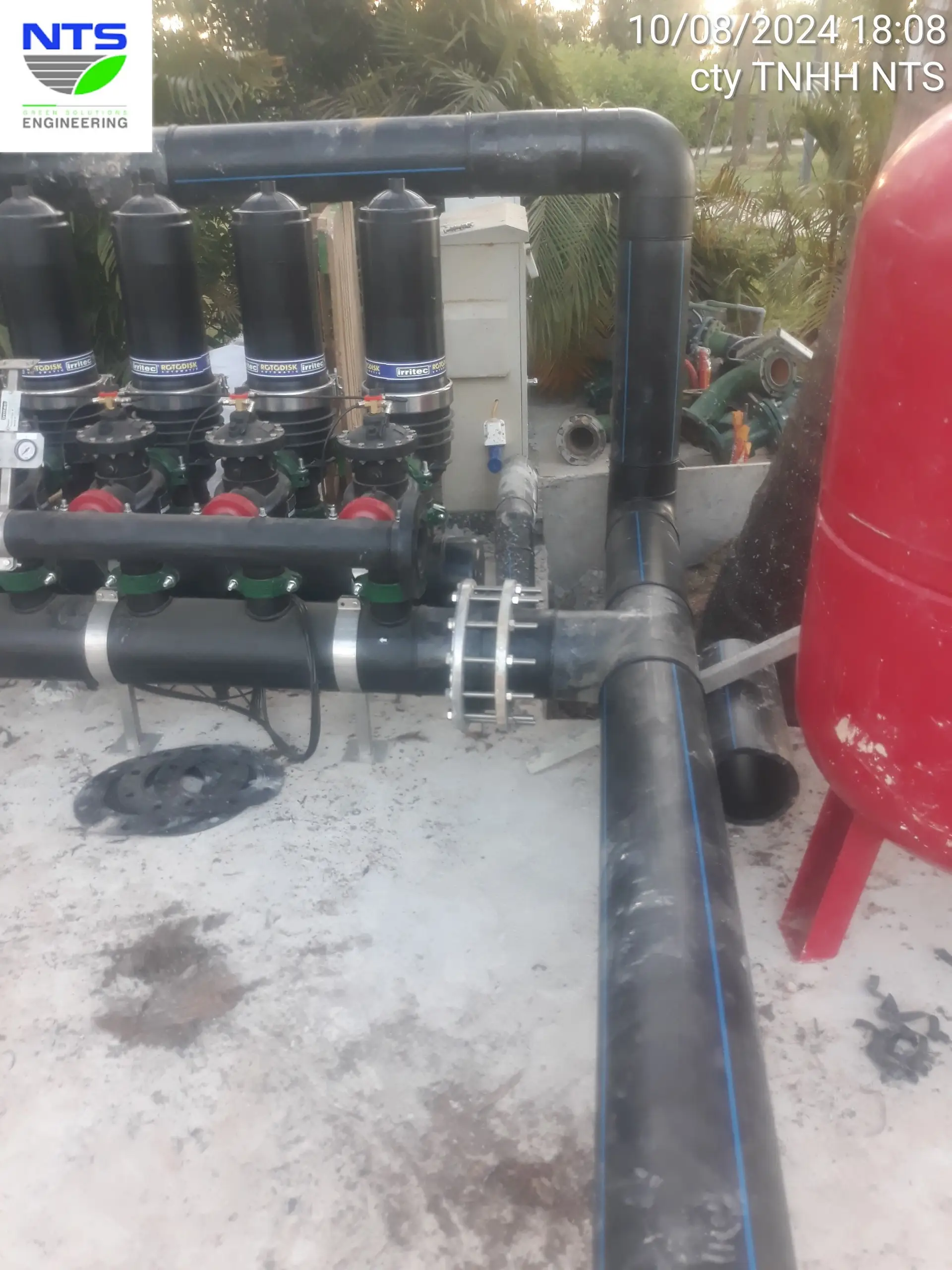
High-capacity disc filter installed on the discharge line after the pump
Retains sand and debris, protecting valve solenoids and sprinklers
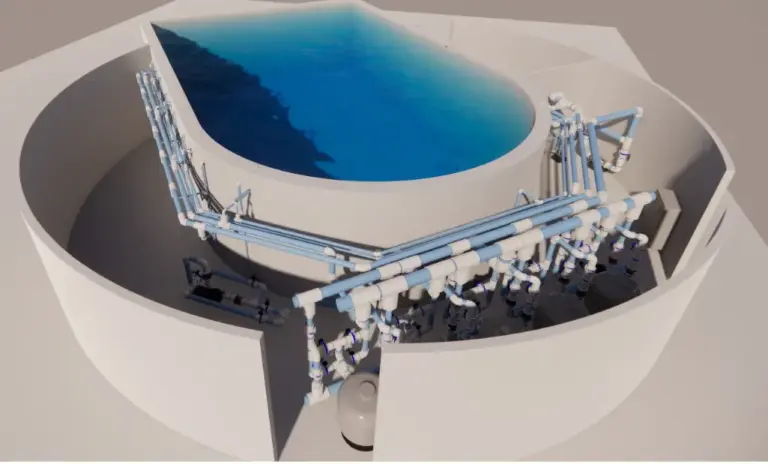
Pump station and automatic disc filtration system with filtering and backwashing
2-wire Decoder control technology for more than 200 solenoid valves
The whole system has more than 200 2-inch solenoid valves (24V), installed in underground valve boxes. Instead of running hundreds of separate wires from the central cabinet, NTS uses 2-wire Decoder control technology.
Each valve is fitted with a decoder carrying its own identification code. The controller transmits both power and signal over the same 2-wire cable run throughout the site.
Comparison criteria
Traditional control system (Multi-wire)
2-wire Decoder control system (applied by NTS)
Wiring volume
Hundreds of single wire runs back to the central cabinet
Only 1 single 2-wire cable run across the whole network
Construction & trenching cost
Complex, large cable trenches, wiring errors are easy to make
Minimal trenching, fast construction
Zone expansion capability
Very difficult, additional wires must be pulled from the cabinet
Easy to splice in new decoders directly on the 2-wire cable
Management & maintenance
Hard to trace faults when a wire break occurs
Managed by identification code, with voltage/current checks for each valve
The 2-wire network is organized into multiple ports. If a fault occurs on one branch, the other branches continue to operate normally instead of shutting down the entire system.
Selecting specialized sprinkler equipment for landscapes
The system flexibly combines several product lines of irrigation equipment to suit each landscape patch:
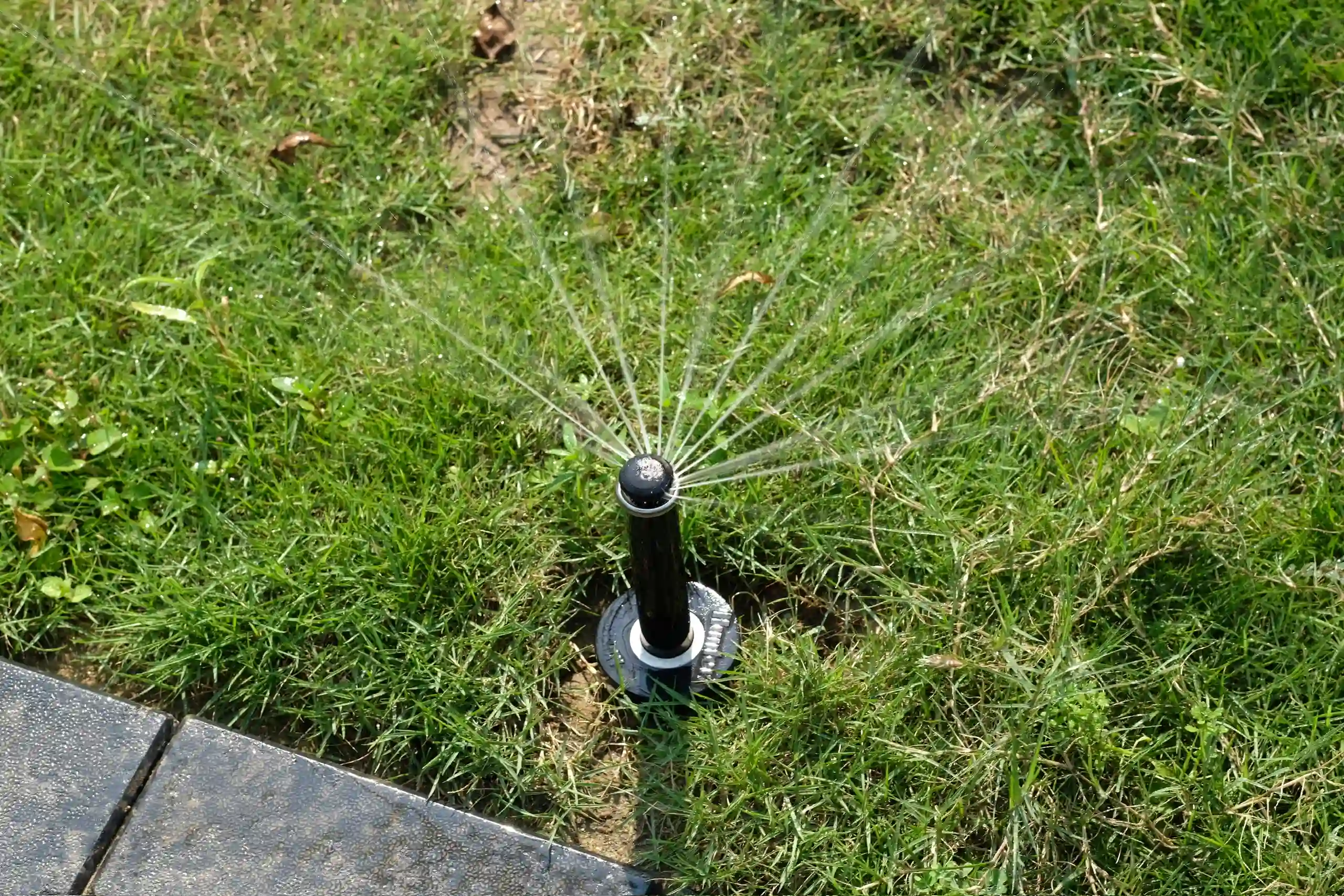
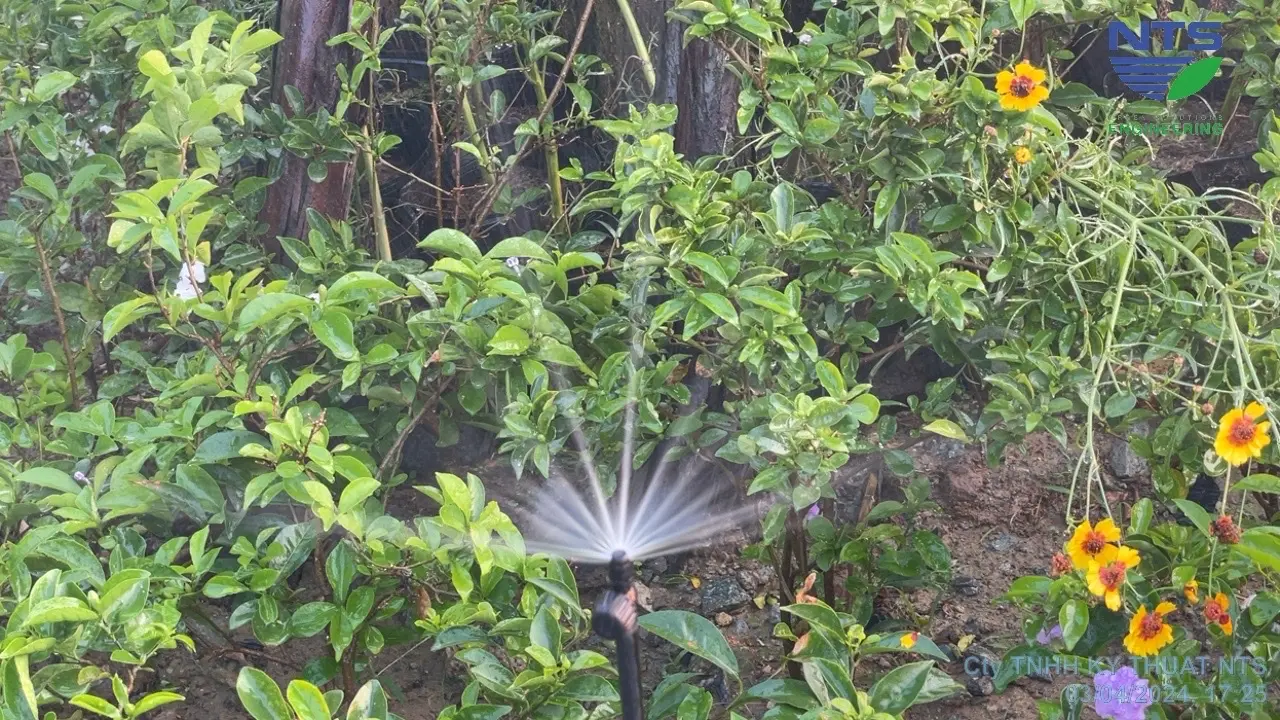
Pop-up sprinklers (lawns & low landscape): The sprinkler body is buried in the ground, pops up 10 cm when irrigating and retracts when it stops. Throw radius from 4 m to >7 m, pressure 2.1–3.8 bar. The spray angle is flexibly adjustable to prevent water from spraying onto the road.
Lawn sprinkler
BS5000 Plus low-flow bubbler (planters & shrubs): Average flow rate ~60 liters/hour, maximum throw radius 6 m, suitable for narrow planting strips or standalone flower beds.
Sprinkler for the median planter area
Rain sensor: Automatically interrupts the irrigation cycle when the set rainfall is reached, avoiding wasteful irrigation after rain.
On-site construction and acceptance procedure
Construction of the irrigation water supply pipeline
Construction procedure for an urban irrigation system
1
Site setting-out & avoiding underground utilities
Review the pipe routes against the drawings and cross-check on site against existing electrical, lighting, water supply and drainage networks and existing vegetation.
2
Trenching, HDPE pipe installation & 2-wire cable run
Excavate trenches, lay the HDPE main pipes DN160/DN110/DN90, install the 2-wire control cable alongside, and assign a decoder code to each valve.
3
Pressure testing & trial run before backfilling (Mandatory)
Fill with water to check HDPE joints for leaks, decoder signals, valve pressure, sprinkler coverage and spray angle on site before reinstating the ground.
4
Controller programming, completion & handover training
Set the standard irrigation schedule according to the IRRICAD model, test the entire automatic cycle, and train and hand over to the urban management board.
Important considerations when investing in a large-scale irrigation system
Always calculate hydraulics with specialized software (IRRICAD) before finalizing pipe diameters to avoid insufficient pressure at the end of the line.
Use a variable-frequency pump station combined with disc filtration to ensure stable pressure and thoroughly prevent clogged nozzles.
Give particular priority to 2-wire Decoder control technology for projects with more than 50 valves, to optimize operating costs and make later fault-finding easier.
All main pipes and zone branch pipes must be pressure-tested and have their spray angles tested on site before backfilling.
Conclusion
The design and construction solution for an automatic irrigation system for an eco-urban area, using IRRICAD software combined with 2-wire control technology, helps investors optimize material costs, save operating water and electricity, and ensure that green spaces grow uniformly. NTS Engineering is committed to delivering landscape infrastructure engineering solutions that meet superior standards of quality and durability.





 Advanced
 Advanced
 Advanced